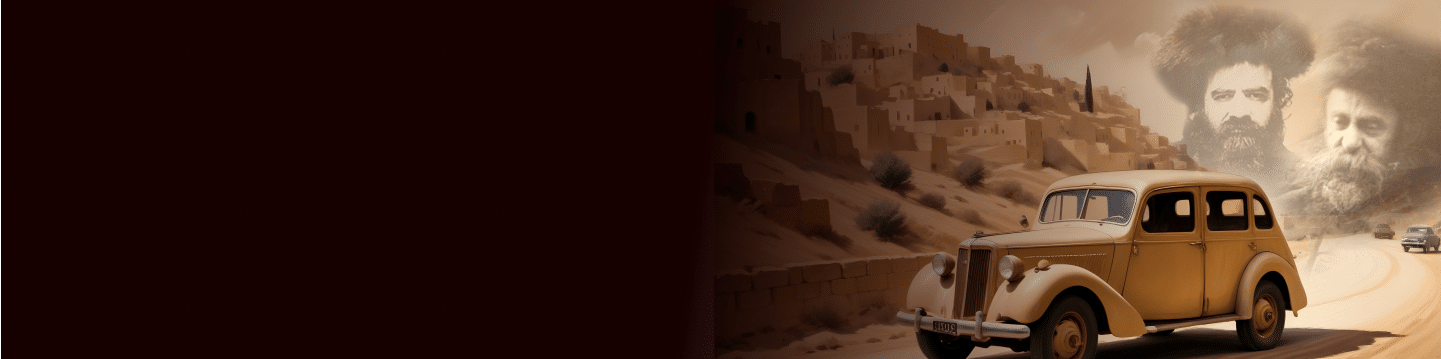

ט’ שבט – יום הצלה
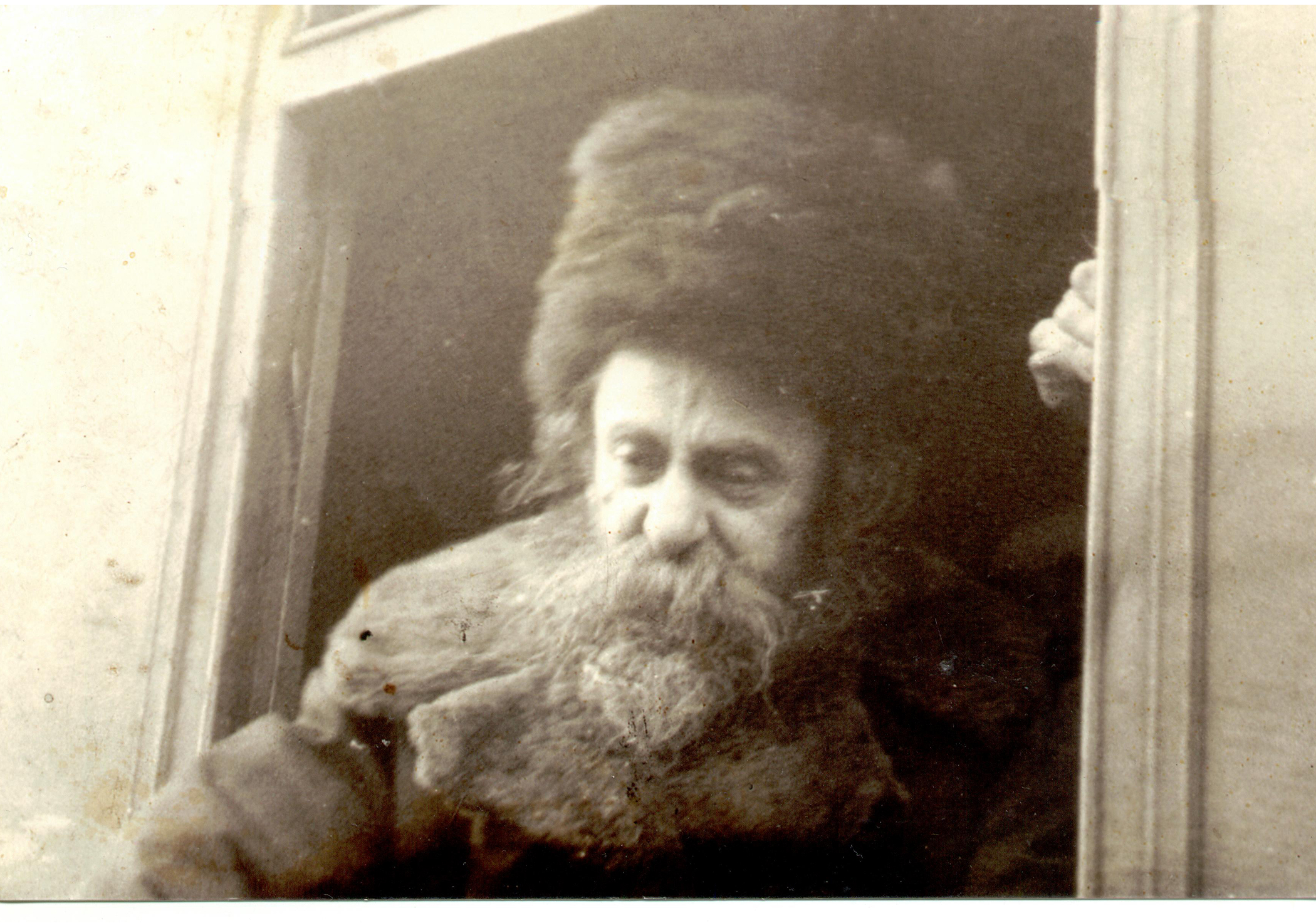
It is 82 years since that fateful Shmini Atzeres night, October 4, 1939, that Reb Aharon of Belz zt’’l requested, “Gibt mir iber der gules kleider – Hand over my galus (exile) clothes!” After dancing a long hakafos, Reb Aharon, his brother The Bilogoray Rav zt’’l, and their families boarded the train to flee the approaching Nazis y’’s.
Many miraculous events occurred during the holy brothers’ turbulent exile and over four years of wandering. The journey from their hometown Belz spanned towns and villages, as well as ghettos in several different countries, numerous hiding places, daring and dangerous journeys under a variety of disguises, and many miraculous escapes, often just avoiding falling into the Nazi’s y’’s bloody clutches, until their final arrival in Eretz Yisroel on ט’ שבט 1944.
This unforgettable day is celebrated each year, thanking Hashem for the miracle of sustaining the Belz dynasty, as the First Belzer Rebbe, Reb Sholom Rokeach zt’’l promised: “בעלזא וועט זיין א ווינקל פאר תורה און יראת שמים ביז משיח וועט קומען – Belz will be an epicenter for Torah and Yiras Shamayim until the coming of Moshiach and on.”
SEQUENCE OF EVENTS THAT LED TO THE ESCAPE
September 1, 1939
World War II broke out, and the Nazi regime started conquering nearby countries and claiming to make the world ‘Judenrein.’
Rosh Hashanah September 14, 1939
Thousands of refugees arrived in Belz from nearby occupied German territories to spend Rosh Hashanah there. Rebbe. Reb Aharon assembled a group of community activists and commanded them to ensure the refugees had places to stay and food to eat and gave them a place to daven and eat their Yom Tov meals comfortably.
Yom Kippur – September 23, 1939
That year, Yom Kippur fell on Shabbos. Polish soldiers swamped the city, including many Jewish soldiers who joined the Rebbe in shul. Many soldiers were wounded, and the Rebbe requested that everyone open their homes for the Jewish and non-Jewish soldiers and offer assistance.
Erev Sukkos 1939
Russian troops sieged the city, despite the approaching Nazis. One of the Russian commanders was Jewish and claimed to be a relative of the Belzer Rebbes. In his merit, the Belzer Chassidim were able to celebrate Sukos calmly.
Chol Hamoed Sukkos 1939
Belz residents learned that according to a Polish agreement, the Russians must leave Belz since it belongs to the Germans.
Hoshana Raba – October 4, 1939
As fast as the Russians evaded Belz, that’s how quickly they fled.
As fast as the Russians evaded Belz, that’s how quickly they fled. The Germans announced that they would occupy Belz tomorrow. Reb Aharon sent 150 Torah scrolls and other worthy Judaica to the nearby city of Rava for safekeeping. A group of Belz activists presented the Rebbe with a map and some escape routes.
Reb Aharon asked the dayanim if he was allowed to travel during Yom Tov if necessary to flee. They answered it’s ‘pikuach nefesh,’ and they forewarned everyone that they’re also allowed to take along necessities because no one knows what the future will bring.
Shmini Atzeres – October 5, 1939
The shul was still as Reb Aharon entered for the last tefillah in Belz. They davened Maariv calmly, as if the terror outside didn’t exist, and then broke into fiery hakafos –dancing, completing all required seven hakafos. Reb Aharon wished each individual ‘Gut Yom Tov,’ made kiddush, and inquired about the situation. When Reb Aharon was told that the Nazis y’’s occupied the nearby towns and were approaching, Reb Aharon commanded everyone to don their weekday clothes and flee. Watching Reb Aharon and his family walking towards the train station was a pitiful sight. Some offered car rides, but there wasn’t enough place for all his family members, so Reb Aharon insisted on walking.
The train station that used to witness thousands escorting their Rebbe on his trips now stood forlorn from escorts. The last train left Belz on Shmini Atzeres night to go to the city of Sokohl under the Russian regime.
Reb Aharon and his entourage remained in Sokhol from Simchas Torah until after Shavous. During their stay, they were usually able to daven and conduct tisch. The Russians gave 24-hour notice for all refugees to flee the city.
June 20, 1940
From Sokohl, they traveled to Radichov, where they needed to stay low to avoid suspicion. Reb Aharon stayed in Radichov for less than a week since the Russians didn’t allow refugees to reside within 100 kilometers of the border.
June 25, 1940
They left Radichov and moved to Busk, but the Busk government didn’t welcome them there, and the Jewish activists worked on finding a place for the Rebbe and his family to live in peace. Three days after arriving in Busk, on Erev Shabbos, they traveled to Przemyslany.
Their plans were diverted, and they spent Shabbos in the city of Galina. What happened was that Reb Aharon’s gabbaim (attendants) wanted to leave, and when they summoned Reb Aharon, he was deep in thought. Shabbos was approaching, and the gabbaim told Reb Aharon, ‘We need to leave.’ Reb Aharon still sat engrossed in his holy thoughts, and suddenly, he got up and said, ‘ Let’s go.
They realized they wouldn’t arrive at Przemyslany before Shabbos, so they stopped in Gilna for Shabbos. They remembered that the daughter of the Santzer Rav zt’’l, Rebbetzin Gitcha a’’h, lived there and were sure she would welcome the Belzer Rebbe for Shabbos.
Their horse and wagon arrived as chassidim were already heading to shul for Shabbos. R’ Shea Heshel Hertzberg a’’h and his son Yonah a’’h, Belzer Chassidim, were ecstatic when they noticed the wagon containing such revered guests. They quickly escorted them to Rebbetzin Gitcha’s home, where her family members graciously welcomed them in. (Her family said that the Rebbetzin went to Przemyslany for Shabbos because “If the Belzer Rebbe is in a nearby town for Shabbos, how can I not be under his holy shadow!”)
Reb Aharon davened in the Galina Shul, where everyone was excited to greet and receive his brachos.
The Friday night tish was conducted in Rebbetzin Gitcha’s home, where R’ Shea Hershel and his two sons were present. During the tish, Russian troops went from house to house and deported all Polish Jews. They came to R’ Shea Heshel’s home and took his family. When R’ Shea Heshel heard the news, he fell faint. After reviving him, Reb Aharon gave him a piece of challah and said: “Please, go, go, Hashem will protect you from harm!” And thus, R’ Shea Hershel survived the war years.
July 1940
A Przemyslany chassid, Reb Yehoshua Schwartz a’’h, brought the Rebbe and his family from Gilna to Przemyslany and gave over his apartment for them to reside. Reb Aharon spent a pretty calm year in Przemyslany, keeping a low profile not to arouse the suspicion of the N.K.V.D.
July 8, 1941
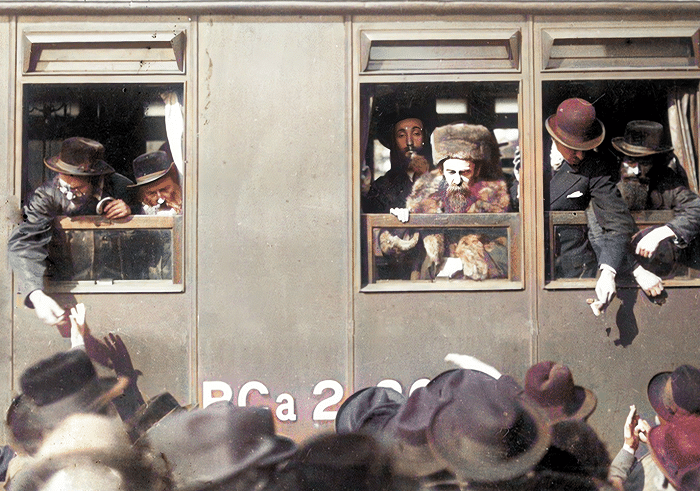
Despite Hungary and Russia’s deal to split Poland, Hitler y’’s wanted to occupy all of Poland, including the city of Przemyslany. By July, the Germans occupied Preslan and commanded the Ukrainians to burn the Przemyslany Shul. They also sought out the Belzer Rebbe, who lived on the same street as the shul. When Reb Moshe hy’’d, Reb Aharon’s eldest son, heard them calling out for his father, he ran outside screaming: “Where is my father? Where is my father?” The accursed soldiers grabbed Reb Moshe, with three close friends, plus another 40 Yidden, and threw them into the shul’s inferno. When Reb Aharon was told of the tragedy, he accepted the news, saying, “A chessed from Hashem, that I gave him a korban (a sacrifice!)”
“A chessed from Hashem, that I gave him a korban (a sacrifice!)”
Reb Aharon’s life was in danger. After many different escape tactics, they paid a hefty sum to a Polish prince who served in the Nazi police, who agreed to escort Reb Aharon to Wiznitz in his police car. But first, Reb Aharon asked his brother, the Bilgoray Rav, to come along. And from there on, the two brothers never separated.
December 21, 1941
Neither had any official documents or travel permit, and the prince planned to leave after dark – after lecht-bentching on the seventh night of Chanukah. Two young chassidim, R’ Nachman Hirsch Singer and R’ Dovid Gezel Erdman, joined them as gabbaim, disguising themselves as non-Jews. After miraculously crossing the borders and traveling days and nights, the driver lost control of the car one night, causing a severe accident where the vehicle turned over, hurling its passengers together into a confused heap, with the crushing weight of the wreckage upon them. The car doors had jammed shut, trapping them among shards of glass.
With superhuman effort, the Biloray Rav pushes himself out of the wrecked car and successfully pulls the Rebbe, gabbaim, and the prince free before the car’s engine catches fire and explodes. A passing wagon driver took them to a nearby inn whose innkeeper summoned Dr. Shea Hendler to treat them.
Note: Dr. Hendler risked his life to tend to the Belzer Rebbe; after treating the Rebbe’s and his brother’s wounds, he refused to pay. Reb Aharon blessed that Hashem should protect him with his close family and presented him with a 20-zloty coin, which he blessed as a segulah warning him to guard it carefully. Dr. Hendler experienced many miracles and survived on his merit. Although he buried the coin with unpublished medical manuscripts for safekeeping in Plaszow, he found them both intact after the war.”
Dr. Hendler experienced many miracles and survived on his merit. Although he buried the coin with unpublished medical manuscripts for safekeeping in Plaszow, he found them both intact after the war.”
December 23, 1941
Wiznitz was a small town, away from main roads or train stations. Therefore, the Nazis y’’s didn’t set up any ghettos or labor camps there. Reb Aharon stayed in Wiznitz for a few months.
In the nearby Bochnia Ghetto they lived a wealthy activist, R’ Eliezer Landau, who saved many Jews by paying the Nazis to allow Jews to work in his factories. He bribed the head Nazi officer to protect the two holy Rabbiners in the neighboring town. The righteous commander obeyed and in time, revealed to R’ Eliezer that the Wiznitz residents would soon be deported to the Bochnia Ghetto and advised the Rabbiners to escape.
August 27, 1942
R’ Eliezer arranged for the two brothers to come to the Bochnia Ghetto, where they only stayed overnight because of an upcoming ‘aktzia.’ The next day, R’ Eliezer arranged for the Rebbe and his family to escape in a truck laden with fabric, where they all lay flat, amongst fellow refugees, under a pile of materials, until they reached the Krakow Ghetto.
December 11, 1942
After a short while, they learned that deportation will take place in the Krakow Ghetto, and R’ Eliezer Landau arranged for them to come back to the Bochnia Ghetto. They arrived in Bochnia late at night, and Reb Aharon lit Chanukah candles in R’ Shimon Kempler’s a’’h home.
May 18, 1943
The Bochnia Ghetto was gated and surrounded by SS patrol. In the middle of the night, the Rebbe and his brother escaped through a narrow opening where a few wood panels were removed in advance. They ran to a house on the outskirts of the Ghetto and in the morning, a Yid arrived with his horse and wagon and took them to the nearby town of Bitchkov. There, they dressed up as Hungarian soldiers, and together with their gabbai, R’ Duvid Spira, traveled to Hungary.
May 19, 1943
They traveled through a roundabout, a longer way to avoid being caught, arrive at Turka, and from there to Yasnia. In Yasnia they rested in the home of R’ Alter Gershon Knoll a’’h, they ate, washed up, and before they left, Reb Aharon thanked and blessed R’ Alter Gershon that Hashem should spare his family. (They all survived the war.) After 20 minutes, their driver knocked on the door informing them that they need to travel to Ungvar.
May 20, 1943
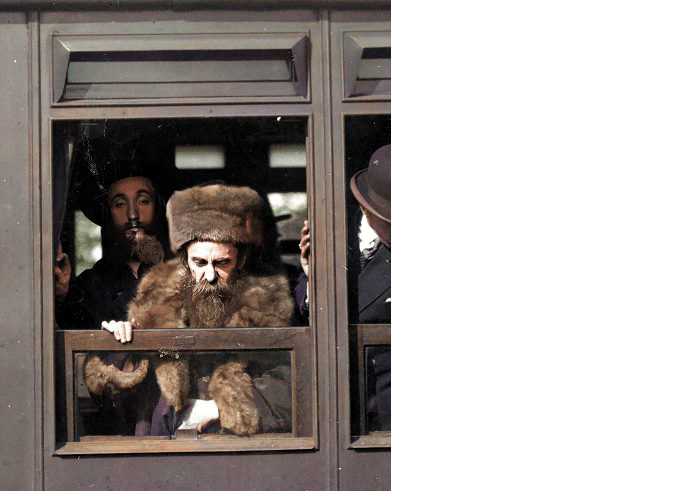
The first thing the Rebbe asked for was a “leib tzidek” – (a wool tzitzis)!
They arrived in Ungvar at the home of R’ Zindel Berger, a Belzer Chassid. The first thing the Rebbe asked for was a “leib tzidek” – (a wool tzitzis), since they traveled dressed as non-Jews. They spent Shabbos there and arranged for a Red Cross ambulance to take them further.
May 23, 1943 – ל’’ג בעומר
The two holy brothers arrived in Pest, Hungary, where, after visiting the home of R’ Yosef Shlaga, they were escorted to the Jewish hospital, where they separated the two brothers to avoid suspicion. Their driver bid them farewell and promised not to perform such a dangerous act again. Reb Aharon stayed in the hospital for six days and then went to the home of R’ Moshe Weingarten a’’h, and the Bilgoray Rav remained in the hospital for a few weeks.
The two brothers stayed in Pest for a few months, celebrating the Yomim Tovim amongst many Yidden. On Motzei Rosh Hashanah, Reb Aharondisclosed to R’ Moshe Aharon Krenstein that they plan to travel to Eretz Yisroel.
October 10, 1943
The Hungarian authority knew that the two holy brothers were in Budapest and were on ‘the most wanted’ list. A day after Yom Kippur, the Budapest police chief, Dr. Ferdinand Batizfalvy, summoned Reb Aharon to his headquarters. The chassidim were worried since the Rebbes weren’t legally registered. However, Reb Aharon wasn’t worried and went with his brother, the Bilgoray Rav, escorted by R’ Yosef Shlaga and Mr. M. Kraus, who was a community activist with connections to the police.
However, Dr. Batizfalvy said he wants to talk to the Rabbiner ‘between four eyes.’ Only after arriving at Eretz Yisroel did Reb Aharon share what occurred. The Nazis y’’s commanded the Hungarian police to deport Reb Aharon and the Bilgoray Rav, together with 500 ghetto escapees. Dr/ Batizfalvy showed the letter to Reb Aharon, which had a picture attached (the Nazis made a mistake and sent a photo of Reb Yissocher Dov of Belz zt’’l.)
Dr. Batizfalvy stipulated two conditions. 1. The Rav must make arrangements as soon as possible to flee Hungary. 2. He should keep the conversation confidential.
Meanwhile, Belzer Chassidim from England and Switzerland was working to obtain entry visas for the two holy brothers from Eretz Yisroel.
January 13, 1944
Before leaving Budapest, Reb Aharon visited the homes of a few community activists to thank them for dedicating themselves to bringing Reb Aharon to Hungary from the Bochnia Ghetto. When visiting the home of R’ Pinchas Frierdiga, the phone rang, and R’ Moshe Gross a’’h from Genf, Switzerland, was on the line. R’ Moshe spoke to the Bilogray Rav, giving discreet instructions for their escape.
January 14, 1944
Thousands stood outside the home of R’ Yosef Yida Reiner, where R’ Aharon stayed, to bid farewell to the two holy brothers. R’ Aharon stood on the porch and wished them well. The two brothers went to a different home before leaving the country since the police were worried about the farewell gathering the day before and wanted to avoid arousing suspicion.
Reb Aharon went to the house of R’ Avigdor Shlaga, where they stayed a few hours. Reb Aharon bid farewell to R’ Shmiel Porges z’’l, who was active in the Rebbe’s escapades. R’ Aharon handed R’ Shmiel a ‘matbaya’ (coin) and told him: “You should be saved from the rasha y’’s, and whatever you do should be with hatzlacha…”
Note: R’ Shmiel Porges related that he saved hundreds of Jews from the Nazi clutches, all on the merit of the ‘matbaya’ from Reb Aharon. To his amazement, the ‘matbaya’ disappeared on the day the Russians freed Budepast. After the war, Reb Shmiel visited Eretz Yisroel and Reb Aharon inquired about his miraculous escapades. When Reb Shmiel said his ‘matbaya’ had vanished, Reb Aharon smiled.
January 17, 1944
After Shachris, Reb Aharon heeded a complex task once again and had his holy beard removed. He sighed profoundly, saying, “What is my mission? What will be the end? Oy vey, Oy vey! I didn’t think I’d need to remove my beard! I thought this was my last galus, and I won’t need to go into exile again! Oy vey! Oy vey!”
The Rebbe’s close people packed his suitcase, but he couldn’t take his tallis and tefillin. Yet, special writings of Belz, they were able to hide. The Bilgoray Rav insisted on taking notebooks filled with holy works and Belz memoirs.
Though they tried to keep the Rebbe’s abode secretive, many people came to bid farewell and receive his brochos. Among them were eight young children who snuck into the Rebbe’s house and asked for a brachah. Though no one was allowed in, the Rebbe pitied them. (All eight children survived the war.)
Reb Aharon and his brother were escorted to the car by two agents. His shamash (aid), R’ Duvid Spira a’’h, the activist R’ Yosef Shlaga, and the driver accompanied them. Reb Aharon told the Bilgoray Rav in the car: “I have rachmanus (pity) on the Hungarian Yidden. But what can I do? I did what I could; I davened, but it didn’t help!”
It was mid-afternoon with a strong sוn when they entered the car. Suddenly, a heavy fog came down, and you couldn’t see anything around. All vehicles were parked on the side due to lack of visibility, and the police who wanted to chase Reb Aharon’s cars couldn’t locate the vehicle, so they kept losing direction. Even the chassidim who tried to follow the car to the Kellenfeld Train Station couldn’t pursue it since the police created block-offs along the way.
Chassidim later recounted this miracle, saying that the ‘Ananei Hakovad – the Heavenly clouds’ protected Reb Aharon on his journey to Eretz Yisroel.
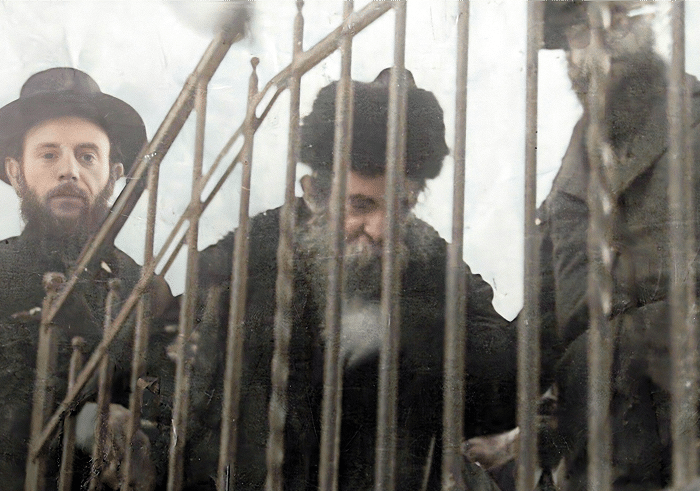
When Reb Aharon and his entourage arrived at the train station, a few Chassidim successfully reached the station to catch a final glimpse of their holy Rebbe’s face and bid farewell.
The police chief, Dr. Batizfalvy, made sure that there shouldn’t be a commotion at the train station, for he was afraid of the Nazis. Some chassidim managed to get onto the train, traveled to the Austrian border, and then returned to Budapest.
Before leaving, Reb Aharon raised his hands, blessed the city, and entered the Orient Express train. Among the car’s passengers were 50 Yidden, who also obtained ‘visa entries’ to Turkey and Eretz Yisroel.
Dr. Batizfalvy wasn’t pleased, for as long as the train didn’t leave Hungary, he wasn’t calm that they were sitting near Reb Aharon and told everyone to spread out among a few cars – the Bilgoray Rav also went to a different vehicle. Reb Aharon remained seated with the police sent to escort him. When the whistle blew for the train to leave, Dr. Batizfalvy quickly entered the Rebbe’s car, kissed the end of the Rebbe’s sleeve, and, with tears in his eyes, asked the Rebbe (in Hungarian) to bless him for all the deeds he did on behalf of the Rebbe’s escape.
Reb Aharon benched Dr. Batizfalvy, and it was translated into Hungarian for him. “It should be the will of G-d that you should survive the coming days happily, and you should successfully save as many Jews as possible!”
Note: Reb Aharon foresaw what was coming, and when he said, ‘you should pass the coming days happily’ since, within a few months, the Nazis invaded Hungary and sent thousands of Yidden to the gas chambers. Dr. Batizfalvy remembered the Rebbe’s blessing and extolled tremendous effort to save as many Jews as possible, placing them in “shelter homes” under the auspices of the Red Cross from Switzerland. He was arrested a few times for his activities, and after the war, the Russians summoned him to court for espionage, but the Swiss Government handed him citizenship, and he escaped there. A few years later, he moved to North America and was nationally awarded in Hungary for his wondrous activities.
The train’s final whistle was heard, and Reb Aharon’s train left the station, leaving thousands of Hungarian Yidden with tears.
Note: Before leaving Hungary, people wondered who would escort the two holy brothers since their gabbaim didn’t have certificates. Not to worry. It was heavenly orchestrated.
A 26-year-old bochur (bachelor), R’ Moshe Silber, lived in Budapest and came once to Reb Aharon with a kvittal and asked for a brachah. After they left, Reb Aharon asked to call back R’ Moshe and told him, “Bocher’l, go to Eretz Yisroel!” R’ Mosh didn’t hesitate, feared the situation in Europe, and hurriedly applied for a visa. When he arrived at the Orient Express, he was surprised to see the two brothers among its passengers. Reb Aharon winked at him and said: “You see! We’re traveling together!” And Reb Aharon asked R’ Moshe if he could be his shamash during their journey. R’ Aharon instructed him to sit next to his place throughout their travels and not budge from his seat, for R’ Aharon was afraid to arouse suspicion by having other Yidden approach him. From that moment on, Reb Moshe Silber served as shamesh to Reb Aharon for a year and a half until he got engaged to the daughter of R’ Chaim Noe zt’’l. Together, they raised a beautiful family.
The train passed many cities with stops on the way. When it arrived in the city of Beketch Choba in Hungary, many chassidim wanted to get onto the train to see the Rebbe, but the police didn’t allow them on. Reb Aharon, who, before the war, used to greet and meet people throughout his travel stopovers, remained in his seat. A young girl dressed as a non-Jew snuck onto the train and handed the Rebbe some bread and milk, saying quietly in Yiddish, “It’s Kosher, made in our house, and my father sent it for the Rebbe.” Reb Aharon thanked her and blessed her with a long life. (She later married R’ Yaakov Heiman in Canada and lived nearly a hundred years.)
The Hungarian police and the rest of the chassidim who escorted Reb Aharon needed to get off the train by the Romanian border, for they didn’t have visas to travel further. Before leaving, they each entered Reb Aharon’s car and hastily bid farewell. R’ Shlomo Engal hy’’d and his son R’ Yaakov hy’’d, who were kohanim, were also on the train, and Reb Aharon asked them to bench him with Birkas Kohanim – that the rest of their travels should pass safely. R’ Shlome lifted his hands above Reb Aharon’s head and, with heavy tears, said the brachah of “יברכך ה’ וישמרך….וישם לך שלום” and bid farewell.
Then, R’ Avigdor Shlaga bid farewell, and Reb Aharon thanked him for all his efforts on his behalf. Reb Aharon then revealed what occurred at his meeting with Dr. Batizfalvy. Since Dr. Batizfalvy asked to be notified when Reb Aharon left the border so he could tell the Germans that Reb Aharon was no longer in Hungary.
When the Hungarian Yidden learned that Reb Aharon and his brother passed the border safely, they celebrated with a ‘Seudas Hodah – a meal to thank Hashem.” Reb Shmiel Porges recounted years later, “We danced with tears of joy!
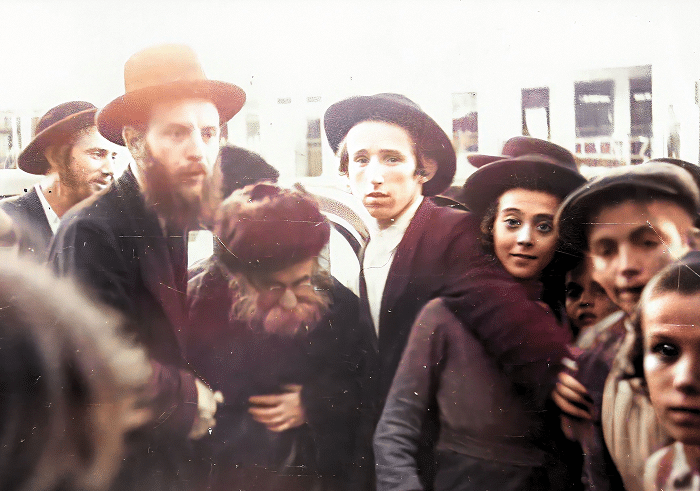
We danced with tears of joy!
A foreigner wouldn’t understand those tears. We cried for joy of our Rebbe’s escape and of fear for our future!” Though Reb Shmiel used to conclude, “Today, after Belz rebuilt anew, I realize that those tears were the seeds that planted a new Belz in Eretz Yisroel which will remain until the coming of Moshiach”
“Today, after Belz rebuilt anew, I realize that those tears were the seeds that planted a new Belz in Eretz Yisroel which will remain until the coming of Moshiach!”
When they arrived in Romania, they stayed in the train station until another train arrived to take them to the city of Arad-Temishvar. The Yidden in Arad awaited the two holy brothers’ arrival, and Reb Aharon took their kvittals on the train and davened Shachris together. From there, they traveled further to Bucherat.
January 18, 1944 – From Arad-Temishvar to Bucharest
In Bucharest, the two brothers stayed for the day in the Foltishaner Rebbe zt’’l home since there wasn’t a direct train to Sofia, Belgrade. The Bilgoray Rav told the Faltishaner Rebbe about all the calamities that befell the Polish Yidden and that Belz was nebach completely destroyed. The Foltishaner Rebbe, who was a descendant and a chassid of Belz, sighed. “Oy, nebach! All this was and will never be again!”
Sitting immersed in thought in a corner, Reb Aharon got up and loudly proclaimed: “What did I hear? Chalila, chalila! No! Our zeida, the first Belzer Rebbe zt’’l, said, ‘Belz will be a cornerstone where the name of Hashem will be known until the coming of Moshiach!’ Years later, when the Foltishaner Rebbe used to recount the story with tears as he remembered those fearful times.
January 19, 1944 – From Bucharest to Bulgaria
The two holy brothers continued their journey from Bucharest to Bulgaria. At the Bucharest border, it took a while to review their documents, and they missed the express train and needed to take the local train. The next day, they realized what a great miracle occurred. The express train that they missed was bombed midway by the English military.
January 20, 1944 – From Bulgaria to Greece
They arrived at the Greek border and switched to a different train. This train wasn’t a passenger train; it was an open train and was dangerous to travel in since the wagons were open from all sides, and it was bitterly cold outside. Reb Aharon shook from cold and weakness the whole way.
When the train approached the Turkish border, the Gestapo y’’’s checked everyone’s documents (since Turkey wasn’t officially involved in the war, the Gestapo took this opportunity to try still and catch refugees before entering Turkey.) They questioned everyone, and when they approached Reb Aharon and saw him wrapped in a wool blanket (due to the extreme cold), an officer exclaimed, “I don’t want to bother with this old fellow; leave him alone…!” They left the wagon without checking his documents or suitcases. When the train passed the border and arrived in Turkey, they could finally sigh of relief – they were saved from the ‘lion’s den!’
January 21, 1944 – Shabbos in Istanbul
It was Erev Shabbos, and the train continued. A group of Yidden formed a minyan mincha, and Reb Aharon said to repeat the pasuk “יאמרו גאולי ה’ אשר גאלם מיד צר” three times. They held a Friday night seudah, and Reb Aharon led a tish with singing and Torah. The train arrived in Istanbul on Shabbos in the morning. They were greeted by excited Yidden, who made the brothers rest before davening Shachris, followed by a morning seudah and Shalosh Seudos, which Reb Aharon prevailed over until late into the night.
The two holy brothers stayed in Istanbul for approximately ten days to rest before continuing to Eretz Yisroel.
February 1, 1944 – Istanbul to Damascus
From Istanbul, they traveled to Damascus, Syria. Hundreds came to greet the Rebbes, and by each station, many more came to see the holy Rebbes. In Damascus, the English patrol looked through everyone’s documents except for the two brothers, as they were ordered not to question those two travelers. However, the English patrol questioned Bilgoray Rav about the situation in Europe and gathered a lot of information from him.
They continued by car from Damascus to Chalev, Syria, where R’ Berish Ortner z’’l came to greet them. (R’ Berish already lived in Eretz Yisroel and played the leading role in the two Rebbes’ rescue.)
From Chalev, they headed to Beirut, Lebanon, and their final destination was Eretz Yisroel. Their driver, Mr. Yaakov Tzerafati, drove them through the Lebanese border. Reb Aharon asked R’ Berish Ortner for a few coins and warmly benched them. He then handed them to MR. Tzerafati as a token of appreciation for bringing them to their final destination.
February 3, 1944 – ט’ שבט – Arrival to Eretz Yisroel
The two holy brothers merited to step upon the sacred soil of Eretz Yisroel! It’s impossible to describe the immense joy of the Yidden in Eretz Yisroel when they heard that the holy tzaddik, together with his brother, arrived safely.
From that day on, Reb Aharon of Belz and his brother, Reb Mordechai of Bilgoray, started rebuilding Belz anew. And on ט’ שבט the first Belzer Rebbe’s proclamation came to fruition. “בעלזא וועט זיין א ווינקל פאר תורה און יראת שמים ביז משיח וועט קומען במהרה בימינו אמן”
Today, Belz thrives under the Belzer Rebbe’s shlita guidance and with the request of his uncle, Reb Aharon of Belz zt’’l: “אז מיר דארפן אויפשטעלן א דור מיט וואס מיר זאלן זיך נישט שעהמען אקעגן צו גיין משיח צדקנו – we have to raise a generation that won’t be embarrassed to greet Moshiach!”
Building on its illustrious Rabbinical dynasty, Belz remains an epicenter for Yiddishkeit (Judaism) until the coming of Moshiach.

INSPIRE YOUR INBOX.
Enjoy a weekly dose of Chassidic insights, highlights and happenings.